“I Wanted to Visit Refugees!

When it comes to travel, I have come to realize that there are two realities: the trip that you picture having and the trip that you actually have.

I’m not sure if I had a lot of ideas about my trip to Lebanon before I left, because it was so beyond the realm of something I could really imagine.  But I did have some thoughts:

  1. The food would be awesome (this proved totally true)
  2. We would spend a lot of time visiting and talking to refugees (this did not prove totally true)

I knew that a lot of the work that our partners were doing in Lebanon involved supporting the 1.8 million displaced Syrians living in that country.  I assumed that we would do a lot of visiting of people that our partners were serving. This, however, was not as straightforward as I thought.  

As I mentioned, Lebanon has not made it comfortable for displaced Syrians .  This means that most are living in small groups in tents – instead of large camps – or cramped in overcrowded buildings and apartments.  It’s not like someone can just “pop by.”  A visit from a group of six people who don’t speak Arabic is not a simple thing!  

We did not tour tent cities.  We did, however, talk to local mission partners and learn about what was happening in the country and how we could support it.  We did not do a round of visits to the homes of refugees.  We did visit churches and ministry sites and witness the love of the people of God at work. It never felt like a compromise.  We heard powerful stories, and we talked to a lot of incredible people.  And we did actually meet a lot of “refugees” (I hesitate to use the term because I learned so many do not like to be called that), though they looked different than I may have guessed.  Some were students in the school. Some attended and spoke at our conference. Sometimes we met people on the street who begged us to help them get to Canada.

I also had the chance to talk to a number of women during the Bible study that I attended, which I mentioned in the last post.  This study was one of a number of opportunities provided by the conference that I attended for people to see firsthand the work that is happening in Lebanon.  Participants could chose from a variety of options for an afternoon visit and I picked the study. It was a highlight of my trip to learn together and pray with these women.  When I got back that night I said to our team leader: “That was an incredible experience.  I can’t imagine anyone experiencing anything more meaningful than me!”

Later, however, four of the guys from our group came back from the visit that they had chosen.  They looked, literally, shell shocked.  They had signed up to visit a local church, and when they got there it turned out to be a church made almost entirely of “refugees.”  Forty of them were there to greet them, and for the next five hours they sat in a circle with them and listened to every one of them tell their story. One of the men said: “It was one of the most holy moments of my life.”

As I listened to them struggle to put into words the afternoon they had shared, I felt a little unsettled. Over the next day or so, as the guys continued to share and process, the unsettled feeling stuck with me.  Each time they talked about their trip it happened again.  After a while, I had to admit to myself what I was really feeling: I was jealous.

THIS was the thing that I had pictured experiencing when I pictured this trip!  I wanted to visit refugees!  I wanted to be blown away!  I wanted to have the “most holy moment of my life!” Somehow it didn’t matter that I had described my own trip to the Bible study as incredible, that I had left my trip feeling like my life had changed.  These guys had the trip that I pictured, and somehow that made me feel cheated.

When I was able to be honest that I envied their visit, I began to talk to God about it.  “I wanted to visit refugees!” – I thought in my prayer. And then it hit me, like the voice of God often does:

“You can visit a refugee anytime you want Leanne.”

I smacked my own forehead.  How silly and naive and selfish was I?  There are 25 000 displaced Syrians living in Canada, 1000 in my own city.  Why did I feel like I had to be in Lebanon to visit someone?  I didn’t. There are newcomers to our country all around me. There are displaced people who are lonely, who are trying to find a home in a strange land, who have story upon story.

With this realization, my jealously abated and I felt total peace as I realized what God had been telling me this whole trip: This isn’t some other place’s story.  This is your story too.

Honesty, I never pictured myself doing refugee ministry.  It’s out of my comfort zone. But you know what?  There is the thing you picture and there is the thing that is.  Maybe none of us in the west pictured that an influx of international refugees would be the thing that would happen around us. But it is what is – and we are called to help.

I thank all of you who have been reading these posts over the last week.  I know a lot of you live in the Middle East, and I thank you for all that you are doing and all that you taught me.  I also know a lot of you who are reading this live in Canada, and that many of you have been eager as a result to support this work in Lebanon through finances and prayer.  I hope that you will.

But let me also remind you, my brothers and sisters in Canada, that God can do – and is already doing – the same thing here as He is in Lebanon.  The stranger is also at our door.  We also have new neighbours. And we don’t have to go to Lebanon to respond with the same love as Christians in that country.

Last week I went to a meeting for people who would be interested in joining a program that pairs local families with Syrian newcomers here in Hamilton.  The purpose is to help create greater community and support for these new Canadians. I figured if my friends in Lebanon can visit five families EVERY week I can manage one.  It’s not a thing I pictured myself doing – but it is what is right in front of me. turns out I will be visiting Syrian newcomers.  Maybe I will have “the most holy moment of my life!” Or maybe not… I’m learning not to focus on what I think it should be like. Because only God knows what will be.

God knew what would be when I signed up to go to Lebanon, and it was good. For this reason, I do not grieve the trip that I imagined having to Lebanon. I celebrate the trip that actually was.  

Friends in the west, perhaps we have too longed grieved for ministry as we think it should be – as it once was, or as we’d like it, to people or groups that we understand or that feel comfortable to us. Perhaps we don’t like what’s happening around us, or maybe we feel ready to move on to something else.  “Refugees?,” we might think, “Still?” Yes, still.  This crisis is still happening.  It is still a thing that is right in front of us.  It is what is. 

And we are God’s people, in the midst of it, who can follow the example of our brothers and sisters in Lebanon – and respond with love.

Lights Go Down, Lights Come On

When you travel, you will always discover things about a place that no website or guide book thinks to tell you about.  One of those things for me when I went to Lebanon was something that it took me a few days to get used to:  the light switches.  Now, I realize that this could have just been the case in the residence in which we stayed, but it was initially disorienting for me to get used to this little difference – the light switches went UP to turn the lights off, and DOWN to turn them on.

As I look back on my brief stay in this wonderful country, I now see that the light switches are a powerful analogy for what I witnessed there.  My whole time in Lebanon was about seeing unexpected ways that light was coming into dark places. Until I went there,  I had no idea about all the ways that the lights were turning on in the Middle East – ways that I never would have expected.  

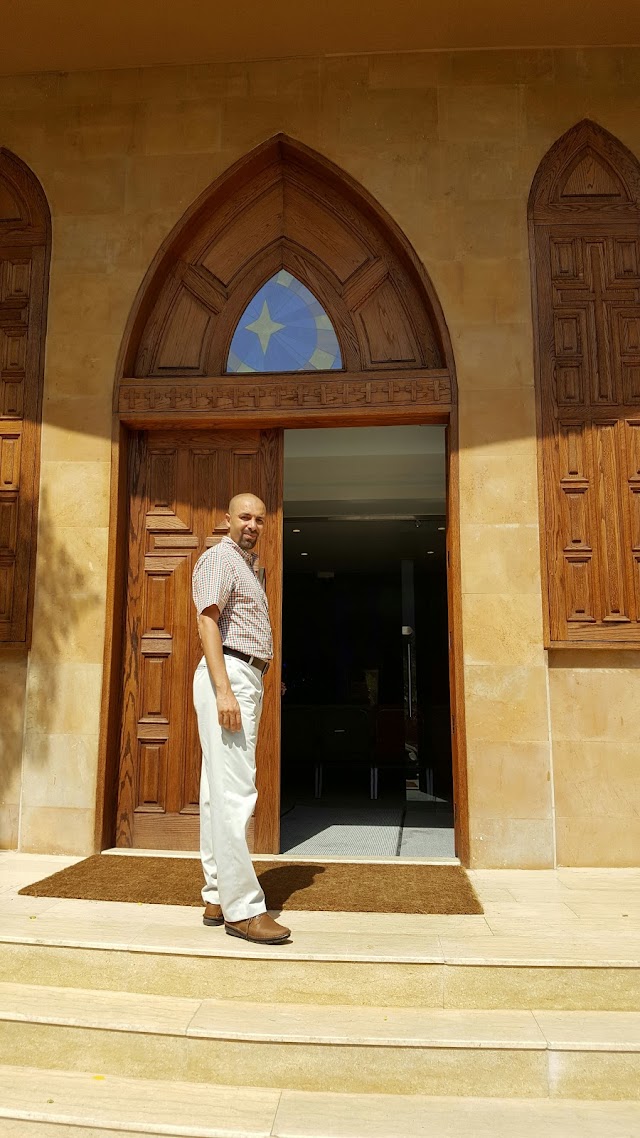
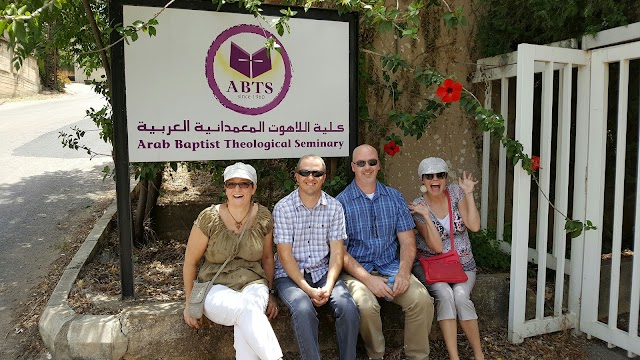
Let me start with the work of the Arab Baptist Theological Seminary (ABTS).  It is a beautiful building with a great view of the Beirut suburb of Mansourieh.

20160615_055042
The view never got old!
I love this place!

This place is a place of light.  One day we had the gift of listening (with the help of a translator) to stories from six of the students who attend.  These students are being taught and mentored at ABTS so that they can go back to their own countries and serve in their churches.  This is no small thing.  Christians in many of the student’s countries face persecution by the state or their families, or both.  Yet, they will go back to these places, trained and prepared for ministry by ABTS.  This is the goal of the school – to build God’s church in dark places.  They are doing this faithfully one student at a time.  Besides local faculty, many of the professors at ABTS are missionaries who raise support to do their work.  One of these professors is our own Canadian Baptist Ministries field staff Emad Bootros.  Emad and his wife are from the Middle East.  In fact, Elmas is from Iraq and lived through many of the horrors there in recent decades.  They had settled comfortably as Canadian citizens in Southern Ontario when God called them to go to ABTS.  Going back to the Middle East was not easy for them.  It was a call of God.  They are turning on the light switch in a way they didn’t expect – and the light is shining.

Friend and faithful servant, Emad.

We also got to visit another ministry of our partners there called SKILD – Smart Kids with Individual Learning Differences.  This one knocked my socks off.  It may shock many of you to hear that there is no special needs programming in schools in Lebanon.  Seriously.  It is not part of teacher training.   This is surprising to us in a country where we have built up support for children with special needs in our own public system over the last number of decades, but Lebanon isn’t there yet.  What does this mean? It means that if your child is severely disabled they simply don’t go to school.  If they have learning disabilities, speech delays, autism, etc. then they don’t get into schools, or they struggle in school, or they fail – over and over and over.  

20160615_053717

SKILD is run by a passionate woman who wants to see this change.  This group is working to build awareness and provide support.  They have worked with the Ministry of Education and have started to do training for teachers in some public schools.  Parents can also bring their children to the SKILD centre for diagnosis and treatment.  Think about this!  God’s people are meeting an incredible need here, and they are working to change the entire education system so that the most vulnerable people can flourish.  If that is not the work of Jesus, I don’t know what is.  I had no idea this was one of the ways God was working through his people in Lebanon.  The light is turning on in an unexpected way.

The recently renovated space is beautiful!
On the wall

The above are projects of LSESD (Lebanese Society of Education and Social Development), which is supported in part by our partners – Canadian Baptist Ministries.  This group also includes a publishing house, the Institute of Middle Eastern Studies, a relief program (much of the work discussed in the last blogs comes through the relief program), and Child and Youth programming to support children and youth at risk . I could talk for hours about all of the ways that LSESD is turning on the lights, and they are not the only place where God is at work.

Outside of LSESD, there is also the day to day reality of what is going on in many churches in Lebanon.  In churches that have responded to refugees with the love of Jesus, countless people from different backgrounds have come to believe in Christ.  What was surprising to me is that this doesn’t necessarily mean that they now call themselves “Christians.”  Christianity (not unlike in the west) has a lot of negative connotations.  Therefore, many hold on to the identity of their people while saying they also believe in Jesus.  This means, for example, that when you go to a Christian church there may be women there in head scarves. Yet, not unlike the early church when debates arose about whether the Jews should make the Gentiles get circumcised or not, Lebanese Christians are saying, like Paul: “Let us not make it hard for people to come to Christ.”

There is a church in Beirut that now has 170 small groups, pockets of people who are meeting all over the city to learn about Jesus. I got to go to one of these studies with a group of women.  What a surprising experience to sit and talk about Jesus with five women wearing full head coverings!  Before I went, I don’t know if I would have been able to make space in my brain for things looking this way.  But sometimes, light switches turn down – and the light still comes on.   

As I was talking to one of the women in the Bible study (through a translator of course), the host said: “Tell her how you came to Christ.”  The woman smiled a huge smile and said: “I didn’t come to Christ. Christ came to me!”  She went on to tell me about being in her home in Syria five years before and crying out to God at a difficult time.  As she prayed, Jesus appeared to her, and told her He loved her. She was changed forever! There are a lot of stories like this – stories of Jesus appearing in dreams and visions and through miracles. Stories of the light coming in ways we, in the west, may sometimes forget that it can.  

And, yes, this light is coming to Syria too.  There are churches in Syria that are thriving, even in the midst of great violence.  There are Christians serving faithfully.  There are light switches all over the place.  I admit, that surprised me. I thought everyone wanted out of Syria!  But I met many Christians who feel called to stay. There is work to be done there, people to care for, light to share – so they stay.  They hold to the words of Moses to God’s people in Exodus 14: 13, as they stood before the Red Sea:

“Do not be afraid. Stand firm and you will see the deliverance the Lord will bring you today.

They are standing firm, waiting, and trusting for the Lord’s salvation.

This reminds me of one other thing that was surprising in Lebanon: the power outages. Several times a day in Beirut, the power shuts off.  It is a surreal experience at first.  All of sudden the lights go down, and no one reacts at all. They sit and wait.  After a couple seconds it comes back on, and everyone goes back to whatever it was they were doing.  One woman told me: “It’s most annoying when you’re doing laundry…”

As jarring as it was the first day, I got used to this pretty quickly too.  I realized that as dark as it may be for a few moments, the lights will always come back on.

This sums up the faith with which God’s people live as they work in this part of the world. Like the locals who have learned to pause and wait and trust for the light’s to come back on after a power outage, so have faithful Christians there learned to live and trust that God’s light will return.  

And so some stay in Syria, and pastor churches whose buildings may be bombed tomorrow.  Some lead a Bible study in a small store front in a part of town with no other Christian churches.  Some teach at a Seminary.  Some help a child with dyslexia learn to read.  To us in the west, it may seem like they are serving in the dark, but they have come to understand something very important.  In not too long – there will be light. 

That One About Loving Your Enemies…

Jesus said this:

“You have heard that it was said: love your neighbour and hate your enemy. But I tell you, love your enemy and pray for those who persecute you.”

Well now.  

No one could say that Jesus made things easy!

Sometimes in my life I have been forced to put this into practice.  For example, there was a certain well known pastor that recently led a big church and had a lot to say about women ministers – like that we were the worst. And also that women who weren’t stay at home moms were maligning the word of God. This guy didn’t know it, but he was my enemy.  After finding myself ranting about him one too many times, I realized Jesus had already told me what to do: I was supposed to love him and pray for him.

Super annoying.    

Loving him was challenging since he had no idea who I was and we lived several thousand kilometres apart, but I did start praying for him.  Begrudgingly.  And then less begrudgingly, I admit.  Funny that.  My heart actually started to change.

Other times I’ve had to do this involve people who hurt my feelings or slight me in some way.  For example, some years ago there was someone in my life who would make digs at me in front of other people every chance they had.  Man, that person got under my skin.  I’d think of all the perfect comebacks, and all the ways I could make THEM look bad.  Then I’d remember Jesus again: “Love your enemy.  Pray for those that get on your nerves” (or something like that).   

So instead of my snappy comebacks, I’d try to love and pray and make space in my heart for this person I didn’t particularly want in my life, because Jesus said to do things that way, and I really do believe He knew what he was talking about.

I admit, before I went to Lebanon, I thought I knew a little about loving my enemies.  I have really tried to give it a good go.  Then I went on this trip and  realized that while I’d been giving myself a gold star for praying for my under-the-table enemies, I didn’t have much to boast about – because, quite frankly, I’ve never had any real enemies.

As I wrote yesterday, many in Lebanon feel they have an enemy, and that enemy is Syria. This tension grew during the Lebanese civil war, which was just 20-30 years ago.  I am ashamed to say that I didn’t really know anything about this before my trip. I did not know the hurt and suffering felt by those who lived through this war, and the long term relational pain caused between Syrians and the Lebanese as a result.

I heard story after story after story.  A pastor in a sermon: “My father was killed by Syrians.”  A woman: “I stood at gunpoint before Syrian soldiers as I held my baby and prayed for God to take me first.”  A church leader: “This entire town was under siege by Syrians for 100 days, with no food or medical supplies allowed past.”  Story after story of pain and loss and grief.

With an aching heart I realized I didn’t get it.  I had never had an enemy like this.  I realized yet another privilege that I have had as a white westerner: the privilege of not having real enemies.  I know we try really hard to create them, over Facebook debates and in pseudo-internet rage, but, Father forgive me, I don’t get it at all. I have never had to love when hate runs so very deep.  

Christians from Lebanon have had to do this.  For the last five years, their enemy has come to live in their backyard. I can’t even fathom how difficult this must be!  It sounds like it should be a nightmare, and for many, it is.  But that is not the story I heard in Lebanon.  The story I heard was the story of Jesus-following, heart-changing, life-altering love.

Jesus followers in Lebanon had to make a very real choice in the last five years – the choice between loving or hating their enemies.  They had to face a tough reality.  Their enemies were now all around them and these enemies were hungry, lonely, and homeless.  As much as they might have wished He had, Jesus hadn’t given them an out.  He hadn’t said:: “You don’t have to care because they’re your enemy.”  He said “Love your enemies and pray for those who persecute you” – so they did.  

That pastor whose father was killed has a church that reaches out to thousands of Syrian families.    A few weeks ago he invited a Syrian refugee to the front so he could wash his feet in front of the whole congregation, to remind them what it means to love and forgive. His church has grown from 60 to 900 people – two thirds of them are refugees.  That woman who prayed at gunpoint is part of a church that cares for 500 displaced Syrian families. She has her “own” families that she visits. Every week, she has tea with her enemies -except now, of course, they are friends.  She told me recently that learning to love her enemy was one of the greatest challenges she ever faced, but it has brought her great blessing.  In that town that was under siege there is a church working tirelessly to care for 2000 Syrian families.  The church started by hoping to help 100 families, but the need grew and grew – so they kept giving. Now, they give out 1400 food hampers every month.  They provide diapers, job training, social support.  When they asked families what their greatest needs were, the answer for many was education for their children.  In response, the church started a school in their basement, and when they ran out of room they set up a tent to help more children. The people doing this are the same people who sat under siege a mere generation ago, and now they’re loving their enemies one food hamper at a time.

This same church also runs day camps every week.  Yes, every week.  They have a bus and bring children in for a morning shift, and then do a second round for a second shift in the afternoon.  

We got to see one of these day camps in action, and meet one of the men who works non-stop to help make them happen.  I was already near the brink of my emotional cup after watching these beautiful children get to experience such joy at these camps, when I met another leader who told me: “You know that man you met? His brother was killed by Syrians. And now he loves these children with all his heart.”

That put me over.

I know about losing a sibling. My sister, who I loved very much, also died. Cancer killed her.

And I thought: “I don’t think I could ever love cancer. I can’t imagine ever doing that. I don’t know if I could love what killed my sister.“

Yet, this is what this man does.  He loves his enemy every day in a practical, tangible way.  He sings songs to his enemy.  He hugs them.  He drives their bus.     

When I think about what stands out to me most from time in Lebanon it is seeing over and over again the lived practice of this teaching of Jesus: Love your enemies.  More so, it was seeing what I already knew deep down.  Loving like Jesus taught us changes things. It is changing Lebanon!  For every story of someone who has known hate, there is the story of someone who has now experienced love and said: “Tell me about this Jesus.” Many of the churches can barely keep up with all the people God is bringing to their door. The hearts of those who once had called Syrians an enemy have also changed as they have found the means to forgive, and heal.

Turns out I don’t know a lot about loving enemies after all.  But after two weeks in Lebanon, I know a little more:

I know it is what Jesus called us to do.

I know I am without excuse.

I know loving our enemies is the way to freedom, and wholeness and new life.  

I know it is changing things in Lebanon, one open heart at a time.

Thanks be to God.


Why Lebanon?

I have recently returned from a two week “vision” trip to Lebanon, where I joined with a team of pastors from around the country to see firsthand the work that our missions’ partners are doing there.  One of the things that is hardest after returning from a trip like this is asking: How can I best tell the story of this country that I believe we in the west desperately need to hear?  Well, I figured, I’ve got a blog. And sometimes people read my blog.  This week, I’m going to do a four-part series on “Lessons from Lebanon” and I hope you will journey with me.

Today is entry number one, which I’ve called: “Why Lebanon?”

“Why Lebanon?”

In the weeks leading up to this trip, I heard that question over and over.

Lebanon?  

Isn’t that besides Syria?

Isn’t it dangerous?

Why would you want to do that?

Answers:

Yes.

No more than many places.

How long do you have?….

Let me tell you more about what is happening in Lebanon.

Lebanon, as already stated, is next to Syria.  In the last year, the very word Syria causes a reaction with most people.  We think of war and refugees, for good reason.  In the last five years, the population of Syria has depleted by half as residents flee the country for safety from the unrest there.  Many of these people, quite logically, have ended up in the land of their neighbours: Lebanon.

Lebanon, a country which has 3 million citizens, now has an estimated 1.8 million displaced people living in their country.  That makes an estimated one in four people living in Lebanon a refugee.   For the last five years (this was happening long before the west saw a picture of a drowned baby on Facebook last fall and woke up), Lebanon has been living in this reality.

What makes it really interesting?

Lebanon does not want Syrians.

I don’t say this lightly. I’m not saying Lebanese people are racist.  This isn’t about a fear of immigration.  It is because for many years, in the late seventies through early nineties, Lebanon fought its own civil war during which Syria got violently involved.  The stories were not good. As one woman told me: “You cannot find a Lebanese person who does not have a story of someone they loved being killed, raped, or kidnapped by a Syrian during the war.”  To put it simply, in Lebanon, Syrians are an “enemy.”

Now, their enemy – a term which I realize us born in the west have the privilege to not even fully understand – has entered their country in droves, and the government wants to make sure refugees do not get comfortable.  What does this mean?

It means that a displaced person pays $200/person to stay in the country, but signs a form agreeing that they won’t work.  (Makes you wonder where they get the $200 from, right? You see the answer every day in the children that are out on the streets selling whatever they can to make some money).  It means they have no status, so their children cannot go to government schools and they can’t have health care.  They are not to stick around.  In fact, putting down concrete under their tents is illegal.

It means that someone has to help.  And for many displaced people, from Syria as well as other countries in turmoil, those someones are people from Christian churches.

Yes, the UN is offering aid, as are other humanitarian groups, and other communities of faith.  But the story that I went to hear was the one about the people of God stepping in to love their neighbour, love their enemy, and welcome the stranger (more on this later).  And it is happening all over that country.  All over that country, where things are more complicated than we can even fathom here in Canada, there are faithful people of God giving out food, visiting strangers, starting schools, providing healthcare, and loving those they once hated. There are churches of 100 people caring for 500 refugee families, churches the size of MHBC with  programs serving 2000 people very month, churches that have turned basements into school rooms so that Syrian children can go to school, churches with food distribution centres and churches with weekly visiting programs.

“Why Lebanon?”

Because I wept when I saw that terrible picture last September, too.

Because I have asked: “What can we do?”

Because I have despaired.

But also because I had grown weary….

Weary of Facebook debates about gorillas and bathrooms.

Weary of Donald Trump and Christians trying to fit his version of hate into the teachings of Jesus.

Weary of my own apathy.

I had heard glimpses of the stories of Lebanon, and when the invitation came to me I immediately thought to myself: “I want to go.”

But, Leanne, isn’t it dangerous?

Before I left, I would try to reassure people who asked this question by saying that our missions partners were very cautious, that they keep their ear to the ground of any threats and dangers, and that if they were worried we would stay home.  In hindsight I could have also pointed out that 1.8 million displaced people have CHOSEN to go to Lebanon in order to feel safe.

Now, if I was feeling especially brave, I would want the conversation to look like this:

Person: “But isn’t it dangerous?”

Me: “No, Lebanon is not dangerous. The Middle East is not all danger.  It is beautiful and full of people living regular lives every day.”  (I could also insert something snarky here about comparison killings from bombings in Lebanon to killings from shootings in the United States -if I was feeling snarky).

And I would add…

“And can I tell you what I have learned?  I have learned that while there are a lot of dangers to God’s people in the world today, I have grown far more concerned about the dangers to the church in the West than I am about the supposed “dangers” to the Church in the Middle East. Because you know what is “dangerous?” It is dangerous when a church puts its comfort over its calling. It is dangerous when we let our fears cause us to forget what Jesus taught us.  It is dangerous to the future of the Church of God when God’s people will no longer take the risks that faith requires.”

Why Lebanon?

Because I was ready to spend some time in the safety of true faith, which I saw every day.

And I look forward to sharing more about that in blogs to come.

 20160617_071200

Things I’m Bad At and Thanks for Grace

I am so bad at so many things.

I am terrible at athletic things.  If you doubt me, let me tell you this: in grade nine, the gym teacher let me serve the volleyball from the attack line.

I am not good at technology. My sound hasn’t worked on my phone for a few months and I haven’t done anything about it because I’m not sure what to do.  I’m also rather hazy on this “cloud” about which I hear so much.

I talk too much.  Yes, I know this to be true.  I go into meetings saying to myself: “DON’T TALK TOO MUCH. Let other people talk.  Be one of those reflective taking-it-all-in sort of people.” Then I come out going: “WHY DID YOU TALK SO MUCH???”

I am bad at a lot of my work things.

My eyes glaze over slightly when people talk about finances, budgets and policies.  I need to do these things, but I’m not good at them.

I am often envious of the pastors who seem more inventive and creative than me.  “I wish I had thought of that!” is a common thought in my head.

I have made incredible mistakes as a pastor.  I have said and done the wrong thing. I have been haunted with regret.

I feel like I’ve failed when people leave our church.  Even if they tell me everything is okay and it’s not about us, deep down I can’t help but lament that I did something wrong….and of course, sometimes – I did.

I am flailing at parenthood.

I get impatient quickly with crying, whining, and loudness.  Sometimes I yell in exasperation.

I don’t know how to support my sensitive son and I don’t have the stamina to remain strong when parenting my willful daughter.

I live with doubt and fear that I have made mistakes that we can’t move past, that I will irrevocably mess them up, and that they will hate me for it one day.

Like I said, I am bad at a lot of things.

I didn’t even touch on housework.

Yes, I know I am also good at things.  I would actually classify myself as a strong person, and in recent months have come to realize how important being viewed as “strong” is to me. Listing my weaknesses is not my favourite, and – let’s be honest – I only scratched the surface of what really hurts. I made peace about my lack of athleticism years ago, but some of the wounds from my pastoral, parenting and relational mistakes are still oozing too much to even name yet.

So why make this list?

I actually wrote this list today not out of despair but out of celebration – if you can believe it.  I’ve been thinking about weakness ever since our church studied this famous verse from the Bible this week:

“But He said to me:  My grace is sufficient for you, for my power is made perfect in weakness” (2 Corinthians 12: 9)

The man who wrote down this verse, the apostle Paul, shared these words in a letter to a church in a place called Corinth.  Unfortunately, it seems that he was having some conflict with his friends there.  In fact, snippets of the letter show that many of these friends were beginning to criticize Paul.  You get the sense that they were doubting if he should be an apostle at all.

Paul does at first challenge them about their assessment of him.  He tells them, rather tongue-in-cheek, about all the things he’s done to show his commitment to Jesus.  But then he does a really odd thing.  He reminds them – this out-to-get-him group – of his weakness. He tells them that he has had a “thorn” in his flesh which he asked God to remove THREE TIMES. God didn’t take it.  Instead He said: “My grace is sufficient for you.”  

I’ve got a few thorns (see above),  and I don’t like them. I’ve asked God – often – to change me. To make me a different type of pastor or parent or person.  I’ve wanted my weaknesses to go away.  

Yet, this is why I celebrate.  I celebrate because God’s words to Paul are also for me: “My grace is sufficient for you.”

I have all the weaknesses I listed here, and more. And I have experienced sufficient grace.  I have known enough grace.  I have known adequate grace.

My list is a miracle.  Really, it would seem that my world should be falling apart with all the things I am incapable of doing!  But it isn’t, and it never really has – although there are days it’s felt close.  Yet, even on those days, there was sufficient grace.  Grace that rescued me from the need to be strong, and let me find God where I was weak.

Jesus does not demand our strength, although that doesn’t stop me from trying to prove to Jesus how strong I am.  Jesus meets us right smack dab in our weakness.  Jesus shows up most when I say: “I CAN’T DO THIS!” instead of when I’m walking around so sure I can do it all.  

At the end of this section of his letter, Paul actually says that he will BOAST about his weakness. He’s going to say: “Look at all the things I’m not!” – so that people can see what GOD is.  

I may not be ready to boast, but I can start with naming.  “I have weaknesses. I have thorns.  I have messed up – and will again.”
And always, always – sufficient grace.

Pastoring is Sometimes

This week I was glad to attend the graduation at our local seminary. It was a special blessing to watch several students that I had mentored in recent years walk across the stage, and I couldn’t help get a little nostalgic, and even a little pensive.  In the midst of my heart-bursting pride and joy, I also asked myself:  Do they know? Do they know what this call which they’ve embraced involves?

What I really wondered was: Had I done enough? Had I explained it well enough, this pastoring life? Did they understand the unique mix of the miraculous and the mundane that is this calling?  Were they ready for the moments when they would say: “Is THIS really what it is???” and worry that perhaps they were getting something wrong – because surely it couldn’t be…could it?

In case I missed it, friends, I’ve tried to do it here.  Here is my last kick at the can at helping you understand what pastoring is, with hope you will remember this on those days when you’re not sure you’re even pastoring at all.  (And, of course any of you non-pastors reading may also find this helpful if you’ve ever wondered about this pastor job, too).

 To put it simply, pastoring isn’t one specific thing.  Pastoring is a whole lot of “sometimes.”

Sometimes pastoring is preparing a sermon and reading lots of books.

Sometimes pastoring is preparing for a board meeting and taking lots of notes.

Sometimes pastoring is leading a Bible study.

Sometimes pastoring is preparing for a hard conversation and praying lots of prayers.

Sometimes pastoring is listening.

Sometimes pastoring is photocopying handouts.

Sometimes pastoring is holding a baby and praying blessing over them.

Sometimes pastoring is holding the hand of someone who is dying, and praying blessing over them.

Sometimes pastoring is the joy of journeying with someone as they become a disciple of Jesus.

Sometimes pastoring is the heartbreak of seeing someone walk away from faith.

Sometimes pastoring is running a Mom’s group.

Sometimes pastoring is balancing a budget.

Sometimes pastoring is weeping over a budget.

Sometimes pastoring is giving someone a ride.

Sometimes pastoring is preaching a sermon that you didn’t have time to make as good as you knew it could be, and reminding yourself “I have another week.” .

Sometimes pastoring is walking through the aisles of your church pews or chairs and picking up garbage left from the week before.

Sometimes pastoring is an hour on a Saturday cutting a bit sheet into pieces of cloth to use for a sermon illustration.

Sometimes pastoring is filling a grocery cart with 300 packs of ramon noodles for Christmas hampers.

Sometimes pastoring is buying 100 feet of eaves troughs to use for a giant ice cream sundae.

Sometimes pastoring is price checking hot dog buns for the church picnic.

Sometimes pastoring involves your friendly puppet, Ralph.

Sometimes pastoring involves wearing bunny ears.

Sometimes pastoring is letting people hate you, because telling them the whole story would be even worse.

Sometimes pastoring is hearing a story that you will never tell, but always carry.

Sometimes pastoring is keeping secrets.

Sometimes pastoring is hugging.

Sometimes pastoring is keeping your distance.

Sometimes pastoring is tea and a game of Skip-Bo.

Sometimes pastoring is not telling them you don’t like coffee.

Sometimes pastoring is writing policy.

Sometimes pastoring is stepping into a situation when everybody else is stepping out.

Sometimes pastoring is sending an email.

Sometimes pastoring is making a phone call.

Sometimes pastoring is writing a blog.

Sometimes pastoring is remembering a birthday.

Sometimes pastoring  is commitee meetings.

Sometimes pastoring is prayer for healing.

Sometimes pastoring is deliverance.

Sometimes pastoring is washing the dish cloths after a church supper.

Sometimes pastoring is preparing a couple for marriage.

Sometimes pastoring is walking someone through a divorce.

Sometimes pastoring is mentoring a new pastor.

Sometimes pastoring is finding someone to talk to so that you can make it through another day.

Sometimes pastoring is checking which markers work in the marker bin.

Sometimes pastoring is participating in a miracle.

Sometimes pastoring is going to a hospital.

Sometimes pastoring is going to a jail.

Sometimes pastoring is “I baptize you in the name of the Father, and of the Son and of the Holy Spirit.”

Sometimes pastoring is “The Lord bless you and keep you.”

Sometimes pastoring is “The body of Christ broken for you, and the blood of Christ shed for you.”

Sometimes pastoring is “This is ashes to ashes and dust to dust.”

Always pastoring is the very Spirit of God in every moment…

And sometimes (on the good days), pastoring is knowing it.

Just a Blog About Saying “Just”

I have been in the midst of a personal challenge for the past several months.  I have been trying to stop saying “just.”  

It began when I heard one of those radio shows where people call in and guess the answer to a question. The question was:  “What is the one word that you can stop saying at work to make you sound smarter?” I thought the answer would be “um” or “like.”  Much to my surprise, the answer was “just.”

After the answer was revealed, the radio host presented some examples of how people do this at work.

In an email: “Just wanted to remind you that your report is due next week!”

During a meeting: “I just thought it might be a good idea if we…”

And the the one of which I am most guilty: “This is just my opinion, but…”

I immediately thought of how significant this is beyond the work setting. I began to notice how often I said “just” in this type of manner.  In fact, shortly after I heard this, a video documentary about the church in Hamilton was released in which I had participated.  I said “just” so many times in my clip that I wanted to smack my own face on the screen.  

“I just have to say that it’s just so wonderful to be part of something like this.  It’s just been so great.”

Clearly, I had a problem.  

I began to pay attention to how often I said just and in what context.  Almost always it was to come across as more gentle, less offensive or less aggressive. “ I just wanted to tell you that I was thinking of you this week…” Or “This is just an idea I had…”  Or “I just think this is something  you might want to think about.”  

But none of these things are “just” something.  They are each important, and meaningful.  Why not say: “I want to tell you I’m thinking of you.”  “This is my idea.” “I’d like you to think about…”  It’s not just a little message or a little idea.  It’s what I want to say, what I think, what I have chosen to tell you – and it matters.

I just think that sometimes we just feel like if we just use a little word like just that it can soften something just a little and it just won’t seem as threatening. Or it’s just that we feel like it’s “just” me and that I just don’t have as much to contribute as someone else.  It’s just a real problem.

I began to make a real effort to say “just” less, especially in writing. I can’t tell you how many times I found myself pressing backspace on an email or a facebook message because I’d done it again. “Just little old me here!!”  “Just my thoughts!”  “Just reminding you of our meeting tonight!!”    

There are, of course, lots of times “just” is still useful. For example, our church motto is “Come, Just As You Are,” and I think it’s pretty great. But I realized I used “just” way too often in ways that basically said: “This doesn’t matter all that much.”  After all, it’s just me.

It was time to stop.  Not because I wanted to sound smarter, but because with that little word I was telling myself and others a lie every time I said it. The lie was: “It’s just me.”

I am not “just me.”  I am me.  My thoughts or ideas are not “just” my thoughts. They are my thoughts, my ideas – often my very heart.  That is not “just” anything.

What was interesting? For me, the practice of deleting “just” in these contexts soon became a reminder to think of myself as God sees me. Perhaps this sounds like a leap, but I am not “just anybody” to God.  And neither are you.

Just something for you to think about!

UGH!

SOMETHING FOR YOU TO THINK ABOUT.

I hope you will.

That Time I Directed a Musical and I Thought it Would Kill Me But Then It Didn’t

In case you’re the one person in my universe who hasn’t heard about this, I recently directed the Willy Wonka Jr. musical at my children’s elementary school.

Perhaps you are thinking: “Oh that’s interesting!  I didn’t know you directed musicals, Leanne.”

Let me begin by saying – I don’t.  Well…I didn’t.  Until I did.

Here’s how the whole thing shook down.

About a year and half ago (fall of 2014) I got this idea to start a little drama club in my kid’s school.  I don’t have any drama training or professional experience, but I enjoyed drama in high school and thought this might be something fun for kids who may not be interested in other types of extracurriculars.  As I shared the idea around with some parents, it morphed into the suggestion to try our hand at a musical.  “Well,” thought me, “I can’t really lead a musical but I can help get it together.”  I invited anyone interested to come to a meeting, and at our first meeting we had a packed room of parents and teachers eager to be a part of the endeavor. What was really exciting was the talent in the room.  A professional director!  Teachers with musical theatre degrees!  Actresses!  Professional dancers! People who knew what they were doing!  

Clearly, we had all we needed to go ahead, and so go ahead we did.  With relief that I wouldn’t be doing this on my own,  I signed on as an assistant director/ general overseerer-ish person.  

We picked a musical that we thought would be fun – Willy Wonka Jr, based on the story of Charlie and the Chocolate Factory.  Because Oompa Loompas would be SO CUTE, wouldn’t they?  And that was that.

Enter a captionThis was in January of 2015.  Auditions happened over the next month during recess breaks and it took a while for the scripts to come in.  Then it was March Break.  Finally, at the end of March we got started,  planning to perform in June.  We began with the music, and I showed up each week to lend a hand to our musical director, who was – you guessed it – a professional musician.  I plunked out songs with one hand on the piano and tried to teach a few songs on the side.  It was about this time that we realized Willy Wonka Jr. is a HARD MUSICAL.  Holy flip, some of these songs are CRAZY. Then we read the introduction to the play where it suggested that we might use “younger kids, like grades 7 and 8” for the oompa loompas chorus groups.

Our school was kindergarten to grade six.

mylittlesquirrel
My little squirrel from Senior Kindergarten, who sat through many rehearsals with her five squirrel friends.  I use the term “sat” very loosely.

This was also when things in the “helper” side of things started to kind of fall apart.  People who planned to help had to drop out, for reasons ranging from family health to schedule changes.  To make things even more interesting, the teachers went on work to rule so none of them were allowed to help anymore.  And then one day, about a month into rehearsals, the director (the professional knew-what-she-was-doing one) found out she got a new job and much to her regret, could no longer attend rehearsals.

And so that’s how for the first time in my life I became the director of a musical.

It should be noted here that not only had I never directed a musical, I had never been IN a musical.  Or taken acting classes. Or dance lessons. In fact, I wasn’t allowed to even GO to dances for quite a while in my adolescence.  And now here I was each week teaching kids to grapevine.

Now, because this was the musical where everything that could go wrong did, we ended up not being ready to perform in June.  We had to push the performance to the fall.  Then the fall came and we had a new principal. Three new principals over the fall in fact. And there was still work to rule. And our school was renovating. And I was also barely keeping my head above water at work where I was doing two jobs instead of one as my husband/associate pastor had started a new job in the summer. I cannot tell you how many days I wanted to just throw in the towel.

But I had committed to this musical. And it had to end one day…right?  Plus, the kids were amazing, and I didn’t want to let them down.  I had to keep going, even if I was unqualified and overwhelmed.

So what did I do?

Well, I showed up.  Each Wednesday and Thursday after school I showed up and I did my best.  I prayed.  I asked God to help me and I tried to remember that it wasn’t about me and that if it failed and everyone hated me afterwards that God would still think I was okay.  I re-assessed what it means to set boundaries and say no and learned some great lessons for next time.  I enjoyed the kids, and let myself laugh at their jokes and at the chaos that often ensued around me (such as when we added those “so cute” oompa loompas the first time.  All 40 of them).  I watched youtube clips to figure out how to turn Violet into a blueberry and how to make Charlie and Grandpa Joe fly.  I tried stuff that didn’t work and tried something else.  I relied on some pretty special people who were carrying the weight of this thing along with me and kept the pieces together that I absolutely couldn’t.  I got the girls who took dance lessons to teach us all dance steps I didn’t know how to do. I lost sleep. Every day I got a different song from the musical stuck in my head.  I got tears in my eyes every single time Charlie and Mr. Bucket sang “Thank Positive” and got to the part where they did the can-can.  (That’s right folks! I don’t know much, but I do know that every kid’s musical needs a can-can!!).

Then on the night of each performance, I showed up.

And after a year and half of roadblocks, exhaustion, stops and starts, and saying “I can’t do this!!” the magic happened.

What was magical?

The kids were magical.  They shone every night.  They glowed.  They were fantastic.

willywonkastage
My view from the “pit” each night. Also we had to create a pit…since our stage doesn’t actually have wings.  And we had to rent a second stage. Because turns out Willy Wonka Jr. also has complicated sets.

The team was magical.  Everyone did their part and the beautiful sets and costumes and lights and props so lovingly contributed by the other people just trying to do their best took my breath away.

kidsinfrontofset

The applause was magical.  And the smiles on the kids’ faces.  And the way they would say each night: “I can’t wait to do this again!” and give me hugs with big thank-yous.

willy wonka kids

It was magical that 29 people from my church came to watch our little musical, to tell me and my kids:  we love you.  

It was magical when parents told me things like: “My child has changed from being in this play.  They are so much more confident!”  

And each day it still feels magical when I stand at school to drop off my kids and my new young friends wave at me and wish me good morning and I tell our Willy Wonka that I love her hair in purple.

Please note: If you are uncomfortable with the word magical in any of the above instances, I am equally comfortable with the word “sacred” in those places.

And how did the magic/ sacred happen?  

This is what I learned:  Magic (sacredness) isn’t about being perfect, or knowing everything you’re doing or getting everything right.  It is about faithfulness, patience, and pushing through even when you’re tired and feel ready to quit.  It’s about two rehearsals a week, one week a time, one month after the other.  It’s about trust and encouragement and saying “let’s keep going.”

I didn’t need to be magical for something incredible to happen.

I just needed to show up.         

willywonkame
Enter a caption

Written with much love and thanks to all of you who showed up with me. You know who you are.  

My Radical Little Church

I’ve been ruminating on this post for a while now, and I’m still not sure I’m quite ready to express all that my heart is feeling.  But soon other things will be upon us, as happens in normal church life, and I realize that before long the radical thing that just happened in my little church will be so normal to all of us that I may forget how profound it is.  So I write it now, and trust that God will reveal my heart’s intentions better than I ever could.

First of all, some back story.  I am a woman in ministry. I have been a minister for over 12 years and ordained for 8.  I don’t actually write about this a lot, although perhaps I should.  I have come to such a place of peace with my calling and my role, and work in environments within my church, denomination, and my city (including churches that don’t ordain women) that have been so supportive of me that I sometimes forget that it’s not as easy for every woman with the same calling as my own.

But it wasn’t always easy, which is ironic because I grew up in a church tradition that has always had women pastors.  It was so normal to me that I didn’t realize it was an issue for some traditions.  It was as a young adult, as I socialized, worshipped and served in inter-denominational settings that I began to be challenged.  That was hard for me. Had I misunderstood what God was leading me towards all this time? I spent a lot of time in prayer and Scripture seeking God’s heart in this matter and my current role should probably tell you where I landed.  It was not without trepidation, however, that I sought a ministry position when I was finished my schooling.  By then I had been warned: “Just be prepared!  It’s really hard to find a job as a woman.”  I had joined a different denomination that officially ordained women, but I discovered that despite having ordained women since the 1940s, that only 5% of their pastors were actually women.  I had recently received a phone call from a gentlemen telling me (and I quote): “I recently heard you preach at a church and thought you were wonderful.  We were wondering if your husband is looking for a job.”  He went on to explain that his church “would not be comfortable with a woman.”  True story.

So there I was. 27. Fresh out of school.  And female.  And actually pretty freaked out – when I got the call from Mount Hamilton Baptist Church.

Mount Hamilton Baptist Church does not seek to be a radical church.  For 93 years, however, (82 at the time), they have sought to be a faithful church.  I was offered a job as the Lead Pastor – and my husband would be the Associate Pastor.

I wish I could tell you how much people loved (or hated) that story!

The ones who loved it were the men and women who were praying for God’s Church to be a place where all men and women could fully use their gifts, in all forms of leadership.  The hiring of a 27 year old female lead pastor, with her husband using his unique gifts in an associate role was an exciting testament for how things could be.  Even more fun?  This was the second woman in a row that the church had hired as their lead pastor.

Funny enough, Mount Hamilton didn’t really seem to know how radical they were.  My brother-in-law teaches at a seminary in Seattle and he would tell me how often he would tell people about this church in Canada that hired two female lead pastors in a row, especially to encourage the women in his classes.  When I would tell people at MHBC this, they would look confused.  “I don’t see what the big deal is,” they’d say.  “We just hired who we thought was best.”  Then they would shrug and say that if others thought it was cool that it was nice, but that really wasn’t the point.

Which, after all, it wasn’t.

And which makes it even more significant.

If you read this blog regularly (shout out to my 17 followers!) you will know that this summer my husband stepped down from his job at MHBC to take on a job with my denomination. This meant that we had some hiring to do.  Over the past few years, our church has grown.  We ended up deciding to hire for TWO permanent positions: A Next Generation Pastor and an Associate Pastor of Discipleship and Mission.

We hired the Next Generation Pastor first, and it turned out to be the young woman who had been serving in this role in a contract position for the last year and half.  This left our Associate role to be filled.

It was a long process, with lots of amazing applicants.  In the end, however, the hiring team felt God leading them to recommend that we hire a wonderful woman named Leslie.  Leslie is a recent seminary graduate, who spent 8 years back at school to pursue ministry as a second career after raising two children.

For those of you counting, this meant that we would have three out of three pastors at MHBC be women.

The way it works in our church when we hire is that a team of church members does the interview process and then they recommend a candidate to the entire membership, who then vote yes or no on the candidate.  After the hiring team made a recommendation, their task was to then bring it to the church for their affirmation.

Now, I don’t want to sugarcoat things here.  There were LOTS of questions about the hiring of an all female staff, and also some concerns.  Nobody really saw it coming. I think most of us had an idea in our head of that third person, and maybe it looked like some version of the last person we had – a charming and gentle man of about 5”7 with reddish hair, perhaps?  There were very valid questions about caring for the men in our church, about the lack of diversity in an all-white female staff, and about how and why this recommendation was made.

But here is why I love my radical-but-doesn’t-make-a-big-thing-of-it church.  Nobody questioned if Leslie was qualified.  Nobody questioned if she was called.  Nobody questioned if God would use her.  Nobody questioned her gifts.  Yes, there were questions about the balance of the team, but NEVER a question about whether a woman could or should do the job because of her gender.

We wrestled through our differences, we tried really hard to listen to each other, we prayed a lot, and in our meeting a few weeks ago, we voted to hire another woman as our Associate Pastor.  Actually, to be clear, there was nothing about hiring a woman in the motion.  It was a motion to hire Leslie Makins – the person the team felt God was leading us to hire for who she was as a minister of Christ.

You should have heard how excited my brother-in-law was when he heard!!

And now I get that same thing again – “That is so cool!!!!”  And I see the joy in the eyes of women in ministry, especially those young and starting out and a little afraid like I was: “There’s hope for me, isn’t there?”  Yes, sister there is.

And not because anyone is trying to be radical, but because they are trying to be faithful.

I love you Mount Hamilton Baptist Church, more than I can say.  I love you for not trying to make a point. I love you for asking good questions.  I love you women for asking how the men would feel with an all female staff, without holding any grudges for the many years nobody asked that question of you when pastoral staffs were all male.  I love you men for assuring us over and over that the calls and gifts of our women were never in doubt.   I love you all because I know that while many of you are still processing the changes and a hire that you did not expect, that you are choosing to trust God and have open hearts.

I know that in a few weeks the novelty of our new staff will wear off, just like it did ten years ago when a young married couple started and it seemed so unusual at first.  And like I said, I know that this hire is not about making a point about women in the church.

But I wanted to tell this story, just in case any of you women who feel led to pastoral ministry might be reading this and wondering where your call might find a home.  Do not despair.   There are more “radical” little churches out there than you realize.  You may not have heard of them because they are more busy just doing their thing than they are promoting themselves as trail-blazers –  which is, of course, what makes it even more beautiful.

Here is a picture of our first staff meeting this week, including our three pastors and our new administrator, Andy.  As you can see, we are very happy to be serving at our radical little church.

staff

Grief Guilt and Birthday Suppers

It is just a few days until what WOULD have been my sister’s birthday.  This year will mark the third birthday that she won’t have since her death.

Some days are harder for me than others when it comes to missing my sister.  The hardest, by far, is her birthday.  On what would have been her birthday, her death seems particularly unfair.  On what would have been her birthday, the ache I feel at not being able to hear her voice is particularly strong. On what would have been her birthday I cannot help but wish for what could have been.  As the day of her birth comes closer, I can feel the cloud of sadness that I can usually keep to a manageable size begin to grow beyond my control. Each day it is a little darker, a little heavier.  I think more.  I remember more.

Here is the thing that I find particularly challenging about my sister’s birthday. I have not yet found the way to honour it. Even though I thought I knew exactly what I would do before she died.  At one point a few months before her death, my sister told me something a person in a class she was taking had told her.  He explained that many years ago (before he could remember) he had an aunt who died, and that every year on her birthday, the whole family got together and had a party in her honour.  Then he said “Roxanne, we have never forgotten her.” I could tell this story meant a lot to Roxanne, and I thought “I can do that!”

This was when I formed my vision for “Rox-mus,” the celebration which would henceforth be celebrated on Roxanne’s birthday.  I told Roxanne all about it.  I told her that on her birthday I would have people over for dinner, people that were new friends or that I didn’t know well, in honour of her.  Because she LOVED making new friends and she LOVED making people feel special and she LOVED having people over for dinner.  I told her that we would give gifts in her honour, to people we thought would just like a present, because she LOVED giving presents.  We would have a day to remember who she was and we would never forget her.  She was already near the end when I told her this, but she laughed and smiled through her pain. I knew she loved it.  And I had every intention of doing it.

Then I got to the first birthday after her death, and I realized something.

I couldn’t do it.

I was too sad.  I was too overwhelmed.  I was not ready to host a party.  I couldn’t bring myself to do it.

“Maybe next year,” I thought.  “Roxanne will understand if I wait a year.”

Then the next year came.  And, once again, I couldn’t do it.  We DID go out to dinner – to a restaurant she loved – and I made a very solid effort to talk about Roxanne and tell her niece and nephew about how great she was.  But every time I talked I started to cry. It was not a happy dinner. I was relieved I hadn’t invited anyone else!

Now here we are at year three.  And, once again, I’m not making any plans.  The difference is that this year I know and understand that it’s okay.

I know that I told my sister I would. I know that she loved the idea of “Rox-mus” and that it has all the potential of a great event.  I also know that her birthday is not the day that I can do it.  And I know – I know to the bottom of my heart – that my sister would have understood.

She would have understood that I didn’t know what grief would be like back when I painted my grand vision of how I’d spend her birthday.  She would have understood that I made a promise I couldn’t keep.

I talk to a lot of grieving people, and I know that with grief often comes guilt.  Guilt about how we should do things.  About unrealistic promises we made (sometimes even demanded by our loved ones who didn’t understand what they were asking of us!).  I write this today to say that I understand the guilt.  And, friend,  I understand that there is a time to let it go.  To grieve as YOU need to.  To be as very sad as you need to be until the cloud begins to lift again.

I will not be celebrating Rox-mus this year.  It does not mean I won’t remember her birthday. I know I will think of little else.  But I won’t have a party – not on that day.

There will be other days to have people over for dinner, just like she did.  Other times to give gifts generously, just like she loved to do.  So many other days that work for me to do “Rox-mus.”

What I told Roxanne that day that I made my unrealistic promise that I think really made her smile was this: “You will never be forgotten.”  That promise, I now understand, is one that does not take a party to keep.

Happy Birthday, my very impossible-to-forget sister…

roxanne